Your septic system works silently underground — until it starts to fail. And when it fails, it rarely does so quietly. Most homeowners first notice something small: a drain that seems sluggish, a faint odor near the yard, a patch of grass that’s a little too green. Dismiss those signs, and a repair that might have cost a few hundred dollars can turn into a system replacement costing tens of thousands. Catching trouble early is the whole game.
Suffolk County homes are especially worth watching. Thousands of them — particularly on the South Shore and in older neighborhoods — still run on cesspools installed decades ago, and many conventional systems here are past their prime. Here are the seven warning signs every homeowner should know.
Watch (8:25): Prefer to watch? Our video walks through all seven warning signs — including the lush green strip over the drain field that means the damage may already be done.
1. Slow drains and gurgling throughout the house
A single slow sink is usually a plumbing problem. But when toilets, showers, and sinks across the whole house start draining slowly — or you hear gurgling from drains and toilets — your septic system is telling you it can’t keep up. The tank may be full of solids, or the drain field may no longer be absorbing effluent. Don’t wait to see if it gets better on its own. It won’t.
2. Sewage odors indoors or outside
A properly working septic system is odorless. If you smell sewage inside the house, you could have a backed-up line, a dry trap, or a full tank. If the smell is outside — especially around the tank covers, the drain field, or the vent pipe on your roof — effluent may be surfacing where it shouldn’t. Persistent odors are one of the clearest early indicators of trouble, and they tend to get worse in warm weather and after heavy water use like laundry day.
3. Soggy ground or pooling water over the drain field
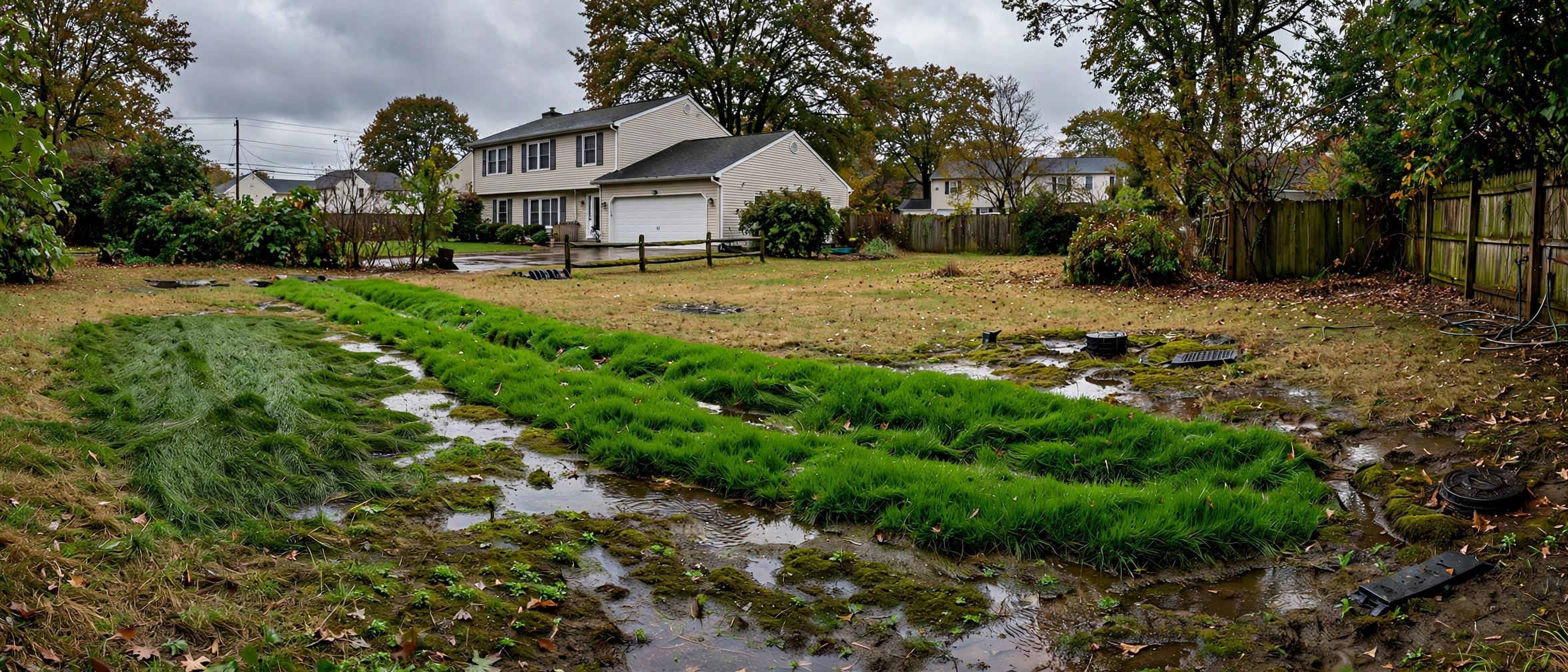
The drain field (leach field) is supposed to absorb treated wastewater and disperse it into the soil. When it’s failing, wastewater has nowhere to go — so it comes up. Wet, spongy areas of the yard that don’t dry out, standing water that lingers days after rain, or actual puddles over the system area all point to a saturated field. This is also a health concern: surfacing effluent is untreated wastewater, so keep kids and pets away from the area until a professional takes a look.
4. Grass that’s suspiciously lush over the system
Ever notice one section of lawn that’s greener, thicker, and growing faster than the rest — right over where your septic system sits? Wastewater is rich in nutrients, so extra-green grass over the drain field often means effluent is rising too close to the surface. It can look like a great lawn problem to have, right up until it becomes a drain-field failure. If the lush stripe follows the layout of your system, call for an inspection.
5. Sewage backing up into your home
This is the sign nobody ignores — and by the time it happens, the system is in real distress. Backups usually appear first in the lowest fixtures: basement floor drains, first-floor tubs and toilets. If flushing a toilet makes water rise in the shower, or running the washing machine pushes sewage into a tub, stop using water immediately and get help. Continued use risks flooding fixtures and contaminating living spaces.
6. An alarm going off on your system
Many newer systems — including Suffolk County’s advanced Innovative/Alternative (I/A) treatment units and any system with a pump — have a warning alarm, usually a red light or buzzer on a small panel outside. If that alarm is sounding, the system is telling you something specific is wrong: a high water level, a pump failure, or a component malfunction. Don’t silence it and forget it. Note what the alarm says, limit water use, and call a service provider. With I/A systems especially, most issues are fixable if you respond promptly.
7. It’s been years since your last pumping or inspection
Sometimes the warning sign is simply neglect. If you can’t remember the last time your tank was pumped — or it’s been more than three to five years — your system is running on borrowed time. Solids build up silently, and the first visible symptom can be the last cheap one to fix. (If this is you, our guide on how often to pump your septic tank walks through what a visit involves.)
What to do when you notice warning signs
First, don’t panic — and don’t try to fix it yourself. Septic systems involve wastewater, confined spaces, and electrical components; DIY work here is genuinely dangerous. Here’s the practical sequence:
- Cut back on water use right away. Space out laundry loads, take shorter showers, and hold off on running the dishwasher — every gallon you send down the drain is one more the failing system has to handle.
- Don’t add chemicals or additives. So-called “miracle” drain-field treatments rarely fix a failing field and can make matters worse by killing the beneficial bacteria the system depends on.
- Call a licensed local professional for an inspection. A good inspection distinguishes a full tank (cheap fix: pump it) from a failing drain field (bigger fix) — and that diagnosis saves you from guessing.
- Note what you’re seeing. When did the odor start? Which fixtures are slow? Where exactly is the yard soggy? Those details help the technician diagnose faster and can matter for warranty or grant paperwork later.
When repair isn’t enough: replacement and Suffolk County grants
If the inspection comes back with bad news, know that you have options — and financial help. Suffolk County’s septic improvement programs offer grant funding to homeowners who upgrade from old cesspools and failing conventional systems to advanced I/A treatment units, which dramatically reduce nitrogen pollution in Long Island’s groundwater and bays. Depending on current program funding, grants can cover a large share of the replacement cost. See our Suffolk County septic grant guide for current eligibility details and how to apply.
Whether your system needs a pumping, a repair, or a full replacement, the most expensive choice is waiting. A few hundred dollars for a pumping and inspection today buys you answers — and possibly avoids a five-figure emergency later.
Seeing any of these signs at your home? Get a licensed local professional out for an inspection before the problem grows. Get local help → or call (631) 519-8552.