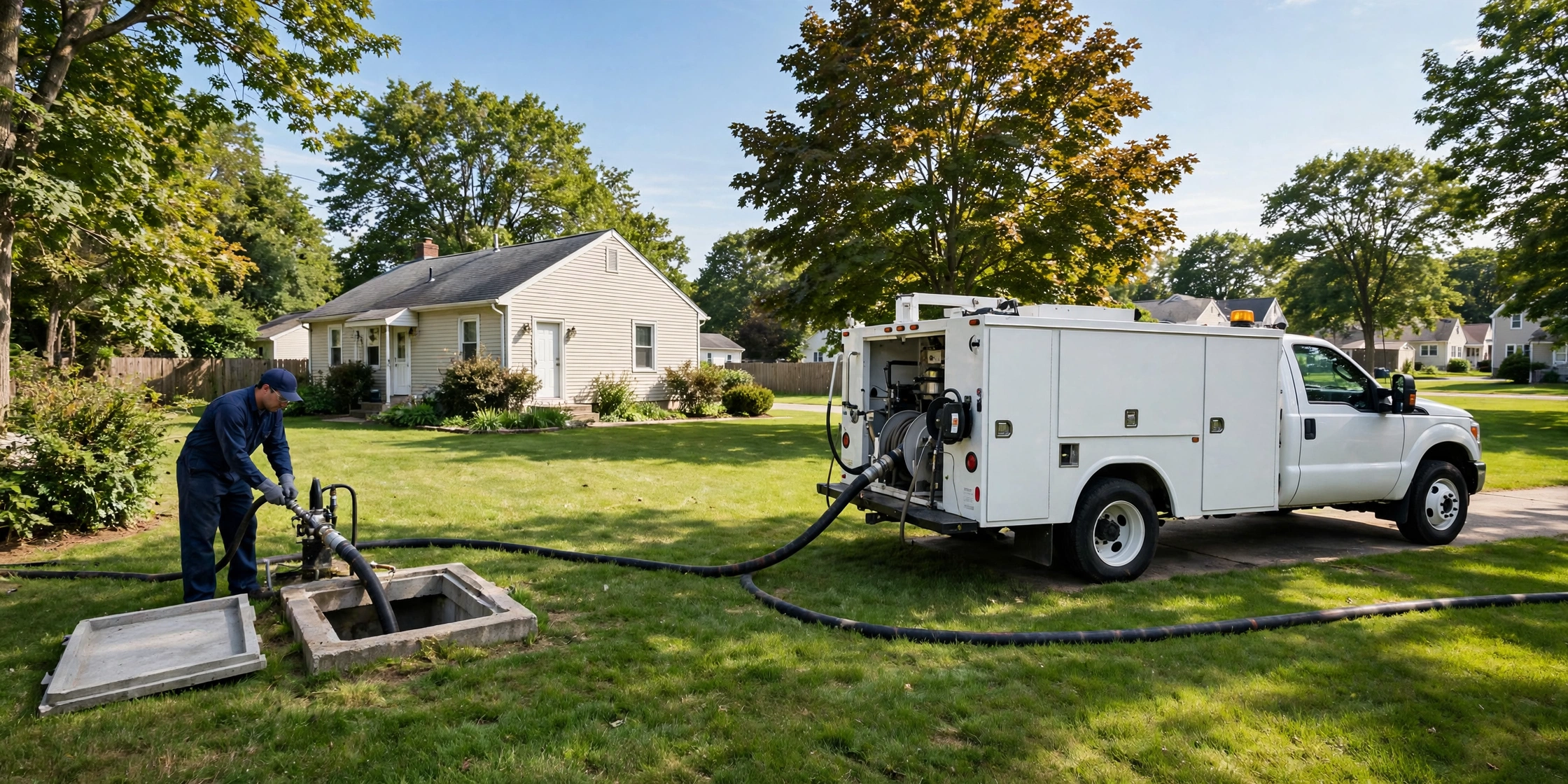
If you own a home with a septic system or cesspool in Suffolk County, regular pumping is the single most important maintenance you’ll ever do. Skip it, and you’re gambling with a system that can cost tens of thousands to replace. The good news: pumping on schedule is simple and relatively affordable.
The short answer: every 3 to 5 years
For a typical household — two to four people, a 1,000-gallon tank, no garbage disposal — pumping every 3 to 5 years keeps solids from reaching levels that can damage your drain field. If you have a cesspool rather than a conventional septic tank, many Suffolk County homeowners pump more often, closer to every 1 to 3 years, because cesspools have no separate tank to settle solids.
When in doubt, err on the side of pumping sooner. A routine pumping costs a few hundred dollars. A failed drain field costs many thousands.
What changes the schedule
- Household size. More people means more wastewater and more solids. A family of six fills a tank far faster than a couple.
- Garbage disposal. A disposal can double the solids entering your tank. If you use one daily, plan on pumping closer to every 2 to 3 years — or reconsider what goes down the drain.
- Tank size. Older Suffolk County homes sometimes have smaller tanks than modern code requires. A small tank with a big household is a recipe for frequent pumpings.
- Laundry and water habits. Lots of laundry loads, long showers, and leaky fixtures all push more water through the system. Spreading laundry across the week helps the drain field rest between doses.
- Guests and seasonal use. Summer visitors, pool season, and holiday gatherings spike your water use. If your home hosts crowds, factor that in.
6 signs you’re overdue for pumping
- Slow drains throughout the house — not just one sink.
- Gurgling sounds from toilets or drains.
- Sewage odors inside or near the tank area.
- Soggy ground or standing water over the drain field, especially when it hasn’t rained.
- Unusually lush, green grass growing over the system — it’s feeding on nutrients it shouldn’t have.
- Sewage backing up into the lowest drain in the house. This is an emergency — call for help immediately.
If you see any of these, don’t wait for your schedule. Get the tank checked.
What does septic pumping cost in Suffolk County?
Prices vary by tank size, accessibility, and how full the tank is, but most Suffolk County homeowners pay in the low-to-mid hundreds for a standard residential pumping. Tanks with buried lids take longer to service, which can add to the bill — which brings us to an upgrade worth knowing about.
What you can do between pumpings
You can’t pump the tank yourself, but you can stretch the time between visits and protect your system:
- Use a monthly bacterial treatment. Septic systems run on beneficial bacteria that break down waste. Monthly enzyme or bacteria treatment packets help maintain that biological balance, especially in homes with heavy chemical cleaner use.
- Switch to septic-safe toilet paper. It breaks down faster and reduces the solids load on your tank.
- Consider a riser kit. If your tank lids are buried, a septic tank riser brings the access point to the surface. Future pumpings go faster, cost less, and you won’t have your yard dug up every few years.
- Protect the drain field. A septic tank effluent filter on the tank outlet catches fine solids before they can clog the field — the most expensive part of your system to replace.
- Keep a maintenance log. Write down each pumping date, the company, and any notes. When you sell the home, buyers and inspectors love seeing it.
The bottom line
Pump every 3–5 years (more often for cesspools and big households), watch for the warning signs, and do the small things in between. Your system will last longer, and you’ll avoid the nightmare of a backup or a failed field.
Need a pumping quote? Suffolk Septic Solutions connects Suffolk County homeowners with independent local service providers. Get local help → or call (631) 519-8552.